In our daily lives, we are familiar with car airbags and the pressure-limiting valves on pressure cookers; they silently safeguard our safety. In the piping systems of industries, laboratories, and even high-end DIY enthusiasts, there is also such an unsung hero—the safety valve (pressure relief valve).
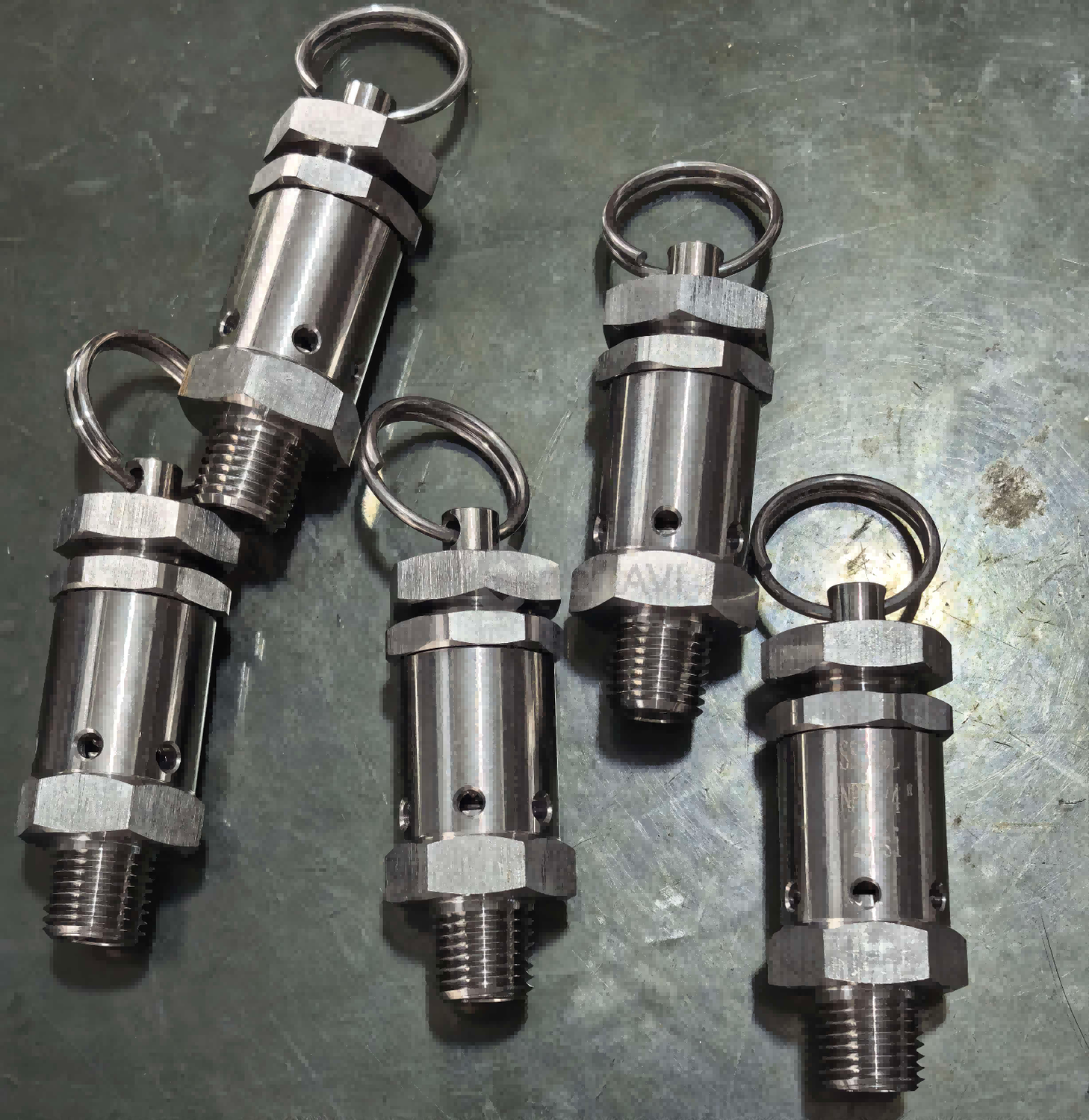
Today, let's "dissect" this hardcore-looking, exquisitely crafted little metal component in the picture to see what great safety knowledge is hidden inside this small stainless steel cylinder.
🔍 Reading Its "ID Card": The Hardcore Parameters on the Nameplate
At first glance, you'll be drawn to the laser-engraved parameters on the valve body. These seemingly simple letters and numbers actually determine its application scenarios:
SS316L: The Rust-Proof "Steel Armor"
This is its material code. SS stands for stainless steel, and 316L is a high-grade stainless steel commonly used in medical and food-grade applications. Compared to common 304 stainless steel, 316L has added molybdenum, giving it extremely strong corrosion resistance. This means it can not only work in ordinary water and air but also easily handle seawater, acid/alkali chemical solvents, and even food and beverage media.
NPT 1/4": The Internationally Standardized "Small Connector"
This is its connection size. NPT stands for National Pipe Thread (tapered). 1/4 inch (about 6.35 mm) is a very standard small pipe diameter. The tapered thread design enables self-sealing when tightened, making it widely used in pneumatic components and small fluid equipment.
25psi: Its "Pressure Limit Defense Line"
This is its cracking (set) pressure. 25 psi (pounds per square inch) is approximately equal to 1.72 Bar or 0.17 MPa. This indicates that it is a low-pressure safety valve. Once the pressure inside the pipeline exceeds this "warning line," it will immediately take action.
⚙️ Internal Mechanism: A "Tug-of-War" Between Spring and Pressure
Visually, it has a compact structure with two hex nuts on the top and bottom for easy wrench installation, symmetrical exhaust holes on the side, and a delicate metal pull ring on top. How does it work?
In fact, there is a continuous "tug-of-war" going on inside.
The Defender: A pre-loaded spring inside. It firmly presses down on the sealing valve core, keeping the medium (water or gas) flowing obediently inside the pipe.
The Challenger: The fluid pressure inside the pipeline.
Normal Operating State: The Challenger's force is relatively small (below 25 psi), the Defender (spring) wins, and the valve remains tightly closed, not leaking a single drop.
Overpressure Emergency State: A failure occurs in the piping system or the temperature rises, causing the pressure to soar (breaking through 25 psi). The Challenger overpowers the Defender, forcibly pushing the valve core open. At this moment, the high-pressure gas or liquid will hiss out from the radial exhaust holes on the side of the valve body, rapidly relieving the system pressure.
Returning to Safety: Once the pressure drops back below the safety line, the spring exerts force again, pushing the valve core back and restoring the seal.
🎯 Where Exactly Is This Tiny Valve Used?
Don't let its palm-sized appearance fool you. Thanks to its combination of 316L material + 25 psi low-pressure setting + compact size, it has a very wide range of applications:
Craft Beer and Food Fermentation: In beer fermentation tanks or home sparkling water makers, yeast fermentation produces a large amount of carbon dioxide. Excessive pressure can easily cause the tank to explode. This valve maintains slight pressure inside the tank while providing precise explosion-proof protection, and the 316L material absolutely meets food hygiene standards.
Small Air Compressors and Pneumatic Systems: Silent air compressors in laboratories or dental clinics often need to limit their output pressure to a lower safety range, and 25 psi is perfectly suitable.
Water Treatment and Reverse Osmosis (RO) Equipment: In water purifier pipelines, abnormal water pump pressure can cause filter cartridges to burst. This valve can promptly relieve pressure and protect expensive filter cartridges.
Medical and Laboratory Instruments: Used for low-pressure gas pipelines and carrier gas protection in analytical instruments to prevent precision equipment from being damaged by pressure fluctuations.
Semiconductors and Microelectronics: Safety valves with extremely high purity and corrosion resistance are required in special gas cabinets or pipeline purge systems.
💡 The "Little Pull Ring" on Top Is Highly Useful
Notice the metal pull ring at the top of the valve; it's not just for looks. It is called a "manual lifting test device."
During long-term equipment operation, the valve core may get stuck due to scale, impurities, or rust. If it gets stuck, it won't work during overpressure. With the pull ring, operators can periodically pull it gently by hand during daily inspections. If a hissing sound of exhaust is heard and it automatically rebounds to seal after releasing, it means this "airbag" is in good condition and ready to save the day at any time.
🛠️ Installation and Maintenance Tips
Mind the Orientation: Although it's a direct-acting valve, it is generally recommended to install it vertically upwards (pull ring facing up) for optimal spring reset and impurity discharge.
Never Block the Holes: The exhaust holes on the side must never be blocked with glue or Teflon tape; they must remain unobstructed.
Regular Check-ups: Even without overpressure, it is recommended to pull the top ring once every three months to prevent the valve core from sticking.
Conclusion:
In complex industrial pipelines and delicate instruments, this little SS316L stainless steel safety valve acts like a loyal guardian. It usually has no presence, but once the system is in danger, it will step forward without hesitation, resolving a potential disaster with a crisp hiss of exhaust. This is the most fascinating detail in industrial safety design.