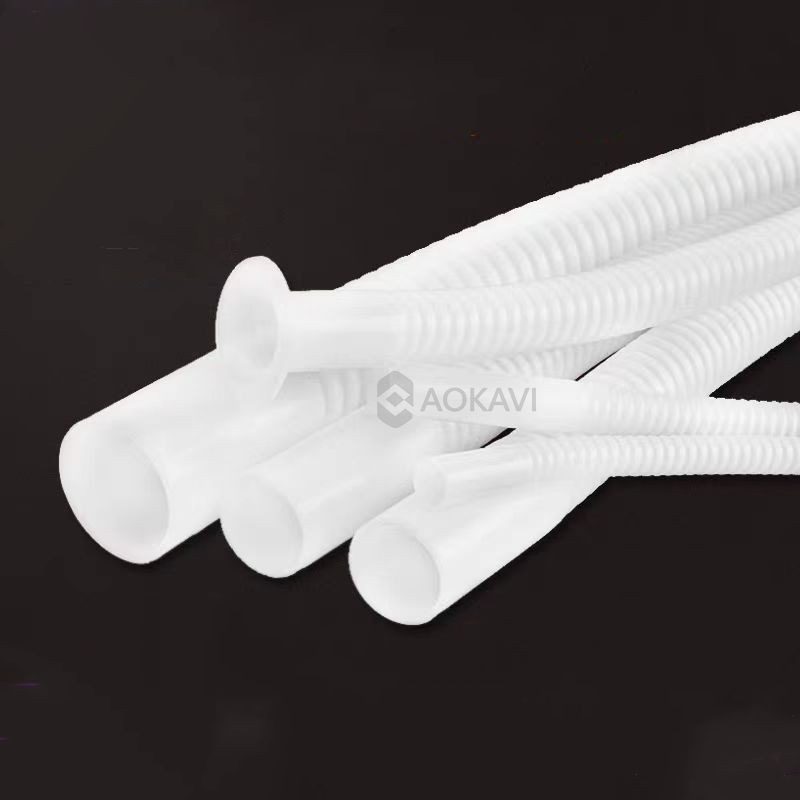
In daily life, we rarely notice a material called PTFE (Polytetrafluoroethylene), yet it truly serves as an behind-the-scenes "all-rounder." The bellows made from it play an irreplaceable role in many critical fields.
First, what is PTFE?
PTFE, commonly known as "Teflon," is renowned for its exceptional performance. It boasts several outstanding properties:
Extreme Chemical Resistance: It is nearly impervious to strong acids, alkalis, or organic solvents.
Extremely Wide Temperature Tolerance: It can withstand very high temperatures while remaining flexible at low temperatures without becoming brittle.
Very Low Friction Coefficient: Its surface is exceptionally smooth, making it difficult for substances to adhere.
Excellent Insulation: It is an outstanding electrical insulating material.
So, what are PTFE Bellows?
Simply put, they are flexible pipes with a corrugated (wave-like) shape made from PTFE material. This bellows structure provides excellent flexibility, expandability, compressibility, and fatigue resistance, allowing it to absorb vibrations and compensate for movement.
Combining the material advantages of PTFE with the structural benefits of bellows, PTFE bellows are primarily used in the following scenarios:
Chemical and Pharmaceutical Industry: This is their main application field. They are used to transport various corrosive chemical liquids, gases, or high-purity pharmaceutical ingredients. They ensure that materials remain uncontaminated during transfer while being immune to corrosion themselves, guaranteeing production safety and purity.
Semiconductor and Electronics Industry: In chip manufacturing processes, it is necessary to transport ultra-pure chemical reagents and highly corrosive specialty gases. The ultra-high purity and corrosion resistance of PTFE bellows perfectly meet these stringent requirements, making them indispensable "blood vessels" in high-end manufacturing.
Food and Beverage Industry: Thanks to their non-stick and non-toxic properties, they are used to transport viscous fluids such as syrups, oils, and dairy products. They are easy to clean and comply with hygiene standards.
Machinery and Automation: As protective sleeves, they shield sensitive cables, hydraulic hoses, or precision mechanical components from external dust, oil, chemical splashes, and mechanical wear.
High-Temperature Environments: In applications requiring the exhaust of hot waste gases or air, such as near engines or industrial furnaces, PTFE bellows can operate stably without melting or decomposing.
In summary, PTFE bellows are like reliable "versatile protective guardians." Utilizing their unique material and structure, they safely transport media or provide protection in extremely harsh environments—whether facing strong corrosion, high temperatures, or high purity requirements. Although not often visible in our daily lives, they silently support many aspects of modern industry, technology, and everyday living.