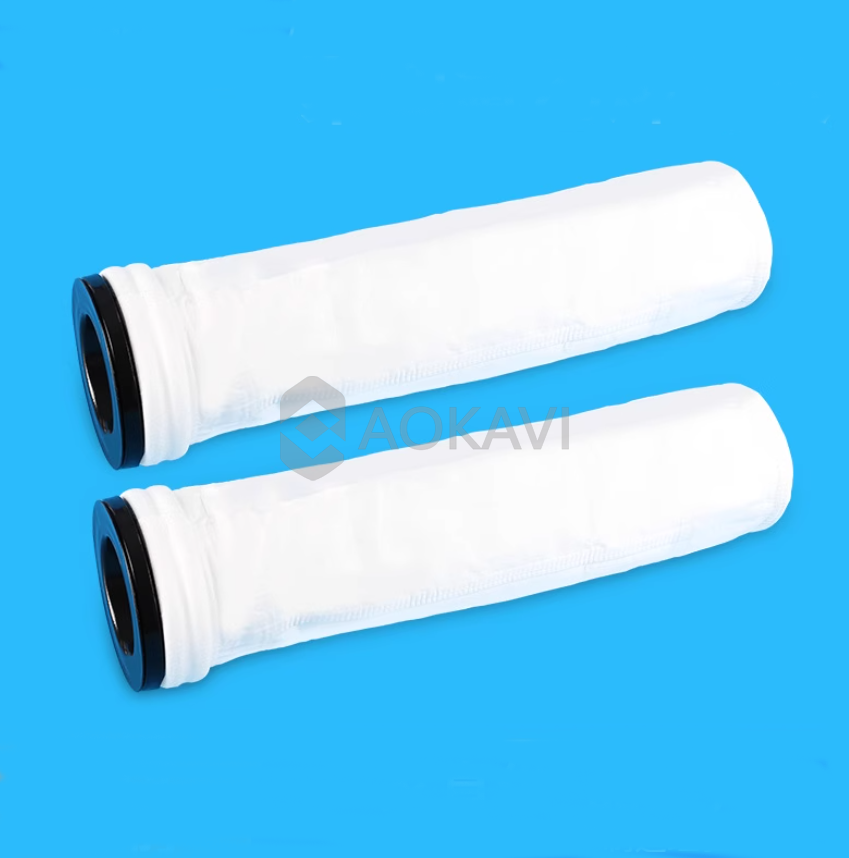
In highpollution industries such as steel smelting, cement production, and waste incineration, dust emissions have long been a major challenge in environmental management. PTFE (Polytetrafluoroethylene) dust filter bags, with their exceptional high-temperature resistance, corrosion resistance, and high-efficiency filtration performance, have become a core component of industrial dust collection systems, earning the title of the "Invisible Guardian of Industrial Dust."
PTFE: From the "King of Plastics" to Filtration Material
PTFE, commonly known as Teflon, is a high-performance fluoropolymer renowned for its extreme chemical inertness, often called the "King of Plastics." It is nearly impervious to acids, alkalis, and organic solvents and can operate stably in extreme temperatures ranging from -200°C to 260°C. When processed into fibers or microporous membranes, PTFE's ultra-fine fiber structure can capture particles as small as 0.1 microns, achieving a filtration efficiency of 99.99%—far surpassing traditional materials like polyester and acrylic.
Why Are PTFE Filter Bags the Industry Benchmark?
High-Temperature & Corrosion Resistance
In environments such as coal-fired boilers and waste incineration, flue gases often contain corrosive components like sulfides and nitrogen oxides. PTFE filter bags can withstand acidic gases and sustained temperatures up to 260°C, whereas conventional filter bags are prone to hydrolysis and oxidative degradation.
Surface Filtration Technology
PTFE filter bags achieve superior dust control in two ways:
Needle Felt Process: PTFE fibers are blended with other materials (e.g., fiberglass) to form a 3D mesh structure with high dust-holding capacity.
Membrane Lamination: A PTFE microporous membrane is applied to the base material, allowing dust to accumulate only on the surface for easier cleaning and lower pressure drop.
Extended Service Life
While standard filter bags may fail within 3–6 months in harsh conditions, PTFE filter bags can last 3–5 years, significantly reducing replacement costs.
Applications: From Cement Plants to Lithium Battery Production
Cement Industry: Handles highly alkaline kiln exhaust dust.
Steel & Metallurgy: Filters heavy metal particles from sintering machine emissions.
Lithium Batteries: Captures nanoscale dust from electrode material production.
Waste Incineration: Resists toxic substances like dioxins.
Future Trends: Smarter & More Eco-Friendly
As environmental regulations tighten, PTFE filter bags are evolving toward:
Low resistance & energy efficiency (e.g., gradient structure design).
Functional composites (e.g., catalytic coatings to break down dioxins).
Recyclable PTFE fiber technology to reduce solid waste.
Conclusion
PTFE dust filter bags strike a balance between industrial progress and environmental protection, playing a pivotal role in the battle for cleaner air. Choosing the right PTFE filter bag for specific working conditions not only ensures ultra-low emissions but also delivers long-term operational savings for enterprises.