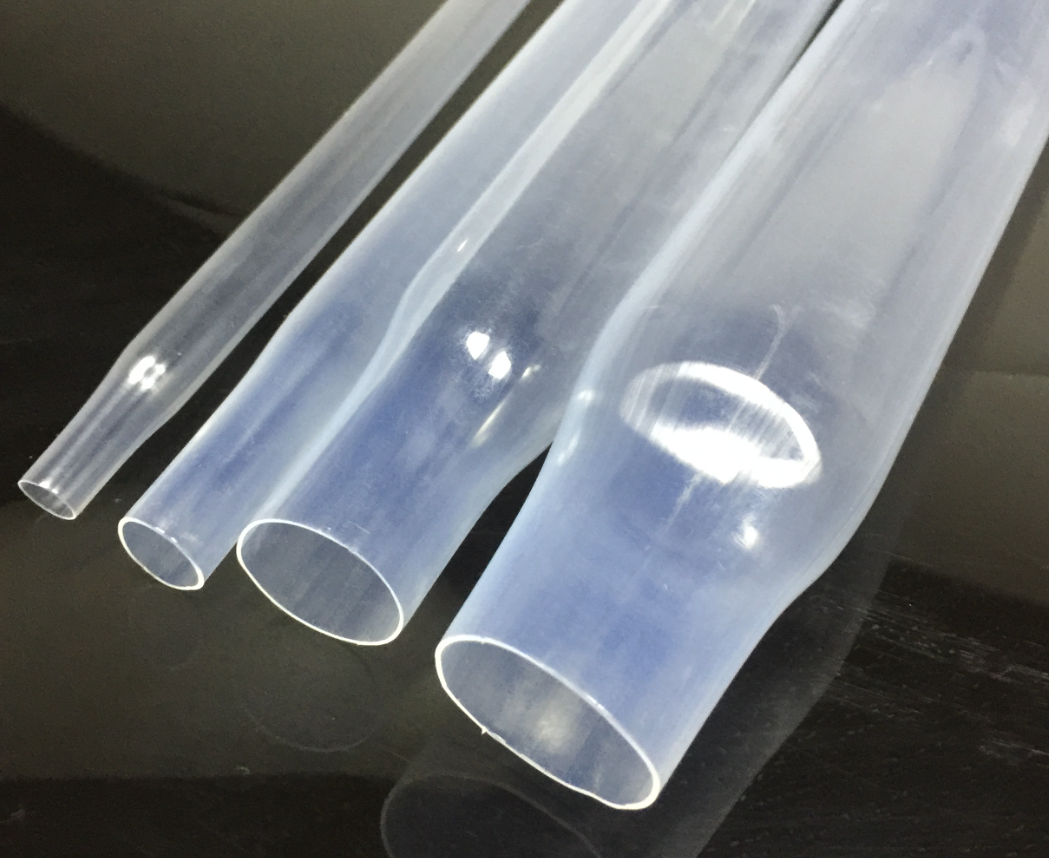
In our daily lives, the term "heat shrink tubing" may not be commonly heard, but it acts as an invisible guardian, silently protecting countless electronic devices and industrial facilities. Among the many types of heat shrink tubing, there is one made from a remarkable material known as the "Plastic King"—PTFE heat shrink tubing.
1. What is PTFE Heat Shrink Tubing?
PTFE is the abbreviation for polytetrafluoroethylene, commonly known by its trade names Teflon or Fluon. It is the most famous member of the fluoropolymer family. PTFE heat shrink tubing is a special sleeve made from this material that shrinks when heated.
Initially, it is a slightly larger tube that easily slips over the object to be protected. Once heated, it behaves as if awakened by a "memory" effect—it rapidly shrinks and tightly conforms to the underlying object, forming a close-fitting, sealed protective layer. This remarkable ability comes from a "directional memory effect" imparted during the manufacturing process of PTFE.
2. Why Is It Called the "Plastic King"?
PTFE earns the title "Plastic King" because it possesses a combination of properties that other plastics can hardly match:
Extreme Temperature Resistance
PTFE heat shrink tubing operates reliably over an extreme temperature range from –80 °C to +260 °C. Whether in the freezing cold of Antarctica or the scorching heat of an engine compartment, its performance remains unchanged.
Virtually Unbeatable Chemical Resistance
It is almost impervious to chemical attack, resisting strong acids, strong alkalis, and a wide range of organic solvents. In corrosive environments such as chemical plants, it is an ideal choice for protecting cables and piping.
Superior Self‑Lubrication and Non‑stick Properties
PTFE has one of the lowest coefficients of friction of any solid material. Its surface is extremely smooth, so materials do not readily adhere to it. When used to cover mechanical components, it significantly reduces friction, allowing equipment to run more smoothly.
Excellent Electrical Insulation
PTFE is one of the most stable electrical insulating materials, effectively preventing current leakage and ensuring the safe operation of electronic equipment.
High Shrink Ratio for Flexible Fit
PTFE heat shrink tubing is available in various shrink ratios, commonly 2:1 and 4:1. A 4:1 ratio means that at high temperature it can shrink to one‑quarter of its original size. This allows it to perfectly conform to objects with varying diameters or irregular shapes, even those with protrusions.
3. Where Is It Used?
With such "hard‑core" performance, PTFE heat shrink tubing finds a wide range of applications:
Aerospace and Military – Protecting critical wiring, cables, and precision components on aircraft and spacecraft from high‑altitude cold and severe temperature fluctuations.
Medical Industry – Used in electrosurgical instruments, interventional catheters, and other precision medical devices to provide reliable insulation and protection.
Electronics and Electrical – Protecting miniature transformers, sensors, thermistors, and other components against short circuits and physical damage.
Petrochemical Industry – Serving as a protective layer for pipes and cables against highly corrosive chemicals.
Mechanical Engineering – Covering rollers or reciprocating parts, where its low friction reduces wear and prevents "stick‑slip" phenomena.
4. How Does It Differ from Other Heat Shrink Tubing?
There are also other fluoropolymer heat shrink tubes such as FEP and PFA. In simple terms, PTFE is the "big brother" among them:
FEP heat shrink tubing – Similar properties to PTFE, but with a slightly lower temperature resistance (around 200 °C). However, its shrink temperature is also lower (about 130 °C), making it more suitable for use with temperature‑sensitive components.
PFA heat shrink tubing – Comparable temperature resistance to PTFE, with higher transparency.
PTFE/FEP dual‑layer heat shrink tubing – Combines a PTFE outer layer with an FEP inner liner. The outer layer provides PTFE's heat resistance and lubricity, while the inner FEP layer, when melted during heating, offers a perfect seal.
In summary, PTFE heat shrink tubing is like a "special forces" soldier in the world of materials—wherever there are challenges of high heat, corrosion, or friction, it is there. With its outstanding properties, it plays an indispensable role in numerous high‑tech fields, silently safeguarding the safe operation of modern industry and technology.